Tech & Social Impact
〰️
Tech & Social Impact 〰️
BLACK DOLLAR INDEX
Technology | Social Impact & Corporate Accountability Positioning
“The Black Dollar Index sits at the intersection of racial and economic justice—providing the information necessary to drive real accountability and change.”
— Rep. Hakeem Jeffries (D–NY)
— USATODAY
THE OVERVIEW
BLACK DOLLAR INDEX | KELLE ROZELL
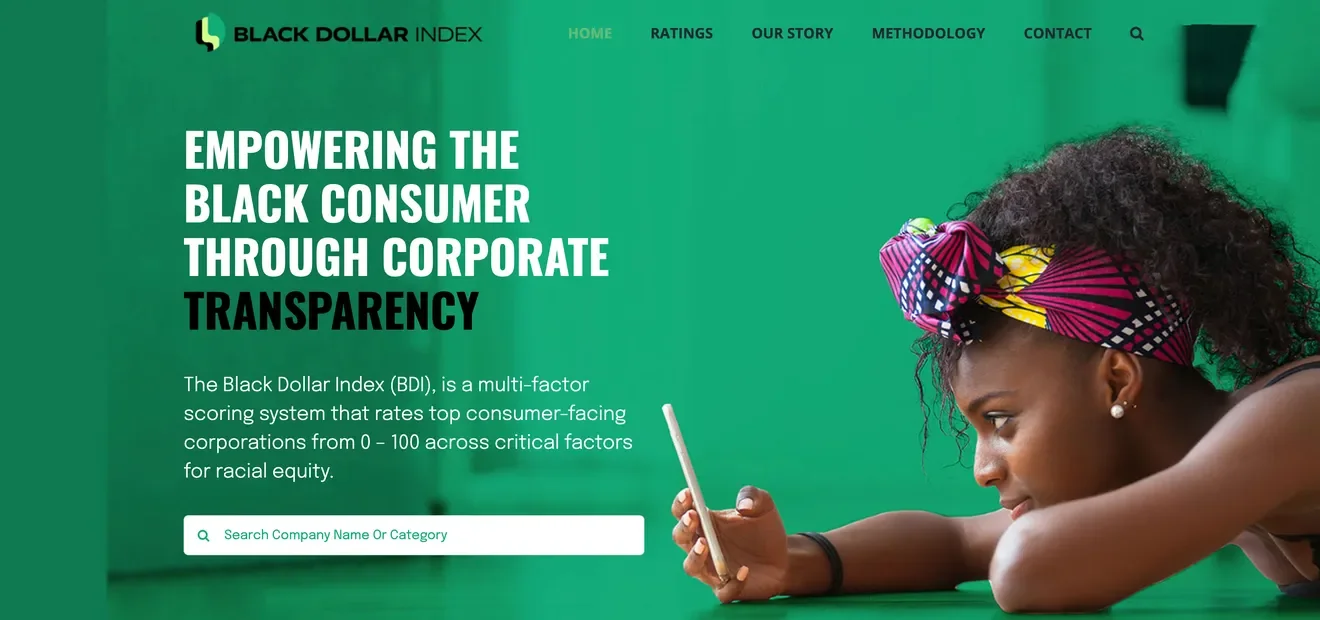
Black Dollar Index (BDI) is a consumer advocacy and accountability platform designed to evaluate corporate America’s commitments to the Black community. Developed in response to heightened public scrutiny following the murder of George Floyd, the index provided a data-informed framework to assess whether corporate pledges translated into measurable action.
The concept was formed by Kelle Rozell alongside a collective of senior Black executives from leading corporations including Johnson & Johnson, Adidas, Nike, and PG&E—professionals uniquely positioned to understand both internal corporate systems and the disconnect between public statements and real equity outcomes.

The Challenge
At launch, Black Dollar Index faced a complex, high-risk environment. The platform represented a first-of-its-kind technology, with no existing press collateral, no prior presence in the tech ecosystem, and no established credibility within legacy social justice organizations such as the NAACP or Black Lives Matter.
Compounding this challenge was founder visibility. While BDI was built by a group of high-ranking corporate leaders, only one founder—Kelle Rozell—was willing to be publicly named. The remaining contributors chose to remain anonymous due to professional risk tied to their executive roles. Kelle herself, then serving as CMO at Disney, had no prior media training, interviews, or press placements, making her both the sole spokesperson and an untested public-facing figure.
All of this unfolded amid an oversaturated, emotionally charged news cycle, where corporations were issuing broad “solidarity” statements with little accountability—making it difficult for any new initiative to break through without being dismissed as performative or opportunistic.
The Strategy
The approach centered on speed, precision, and narrative control.
Recognizing the urgency of the moment, we moved quickly to formalize the platform’s story—building a clear pitch deck internally and activating a live demo to ensure the product could stand up to scrutiny. Rather than pursuing volume, we executed an intentional, tightly controlled media strategy, selectively pitching only four top-tier national outlets and authors with a proven, pre-George Floyd record of covering racial justice and Black economic equity.
The objective was to establish credibility first—on record, in print—before expanding the conversation. A national print feature was secured with USA Today, anchoring the platform’s legitimacy and allowing the narrative to be framed thoughtfully, without distortion.
Once credibility was established in print, the strategy expanded to premium broadcast media. We transitioned the story into verbal storytelling, positioning Kelle Rozell as the face of the platform to humanize the technology and reinforce trust. This resulted in high-profile broadcast placements, including Yahoo Finance and Bloomberg, bringing both authority and scale to the conversation.
From there, we amplified strategically across digital and social platforms—bridging tech, finance, social justice, and Black media ecosystems. Coverage spanned outlets such as WWD, TriplePundit, Money, NerdWallet, Essence, Black Enterprise, Entrepreneur, and Ebony, ensuring the message reached consumers, corporations, and policymakers simultaneously.
Results & Impact
Black Dollar Index launched from zero visibility into a nationally recognized platform shaping corporate accountability conversations. Within weeks, the initiative gained immediate credibility across tech, business, and social impact media—transforming from an internal concept into a public-facing tool used by Fortune 500 companies.
The campaign generated sustained national attention, resulting in over one billion impressions across print, broadcast, and digital platforms. From launch, awareness increased by more than 150%, supported by 11 national trade placements, three top-tier broadcast appearances, and more than 15 digital and social features.
Beyond media metrics, the long-term impact proved more significant. Fortune 500 companies began actively using the Black Dollar Index as a reference point for internal DEI evaluations, with Kelle Rozell stepping into an advisory role to guide corporate strategy and accountability frameworks. What began as a timely response to a cultural moment evolved into a lasting mechanism for corporate change.

“From consumer advocacy to Fortune 500 boardrooms, BDI reshaped how companies approach DEI strategy.”
-CBS MONEY

Founder Results & Impact: Kelle Rozell
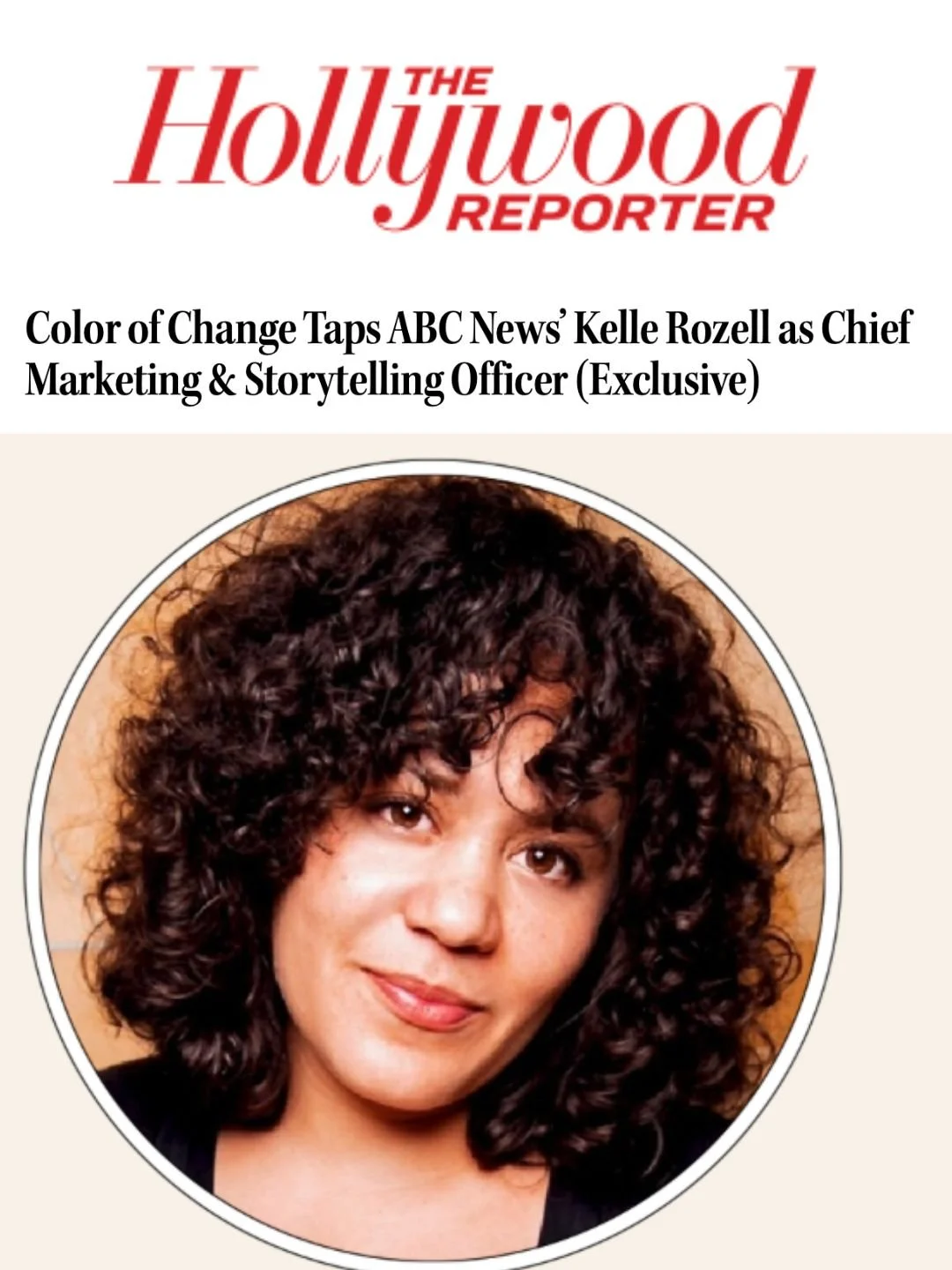
The successful national positioning of Black Dollar Index significantly elevated Kelle Rozell’s public credibility and leadership profile. Following the campaign, Kelle was appointed Chief Marketing Officer at Color Of Change, one of the nation’s leading racial justice organizations—marking a decisive transition from behind-the-scenes corporate executive to public-facing change leader.
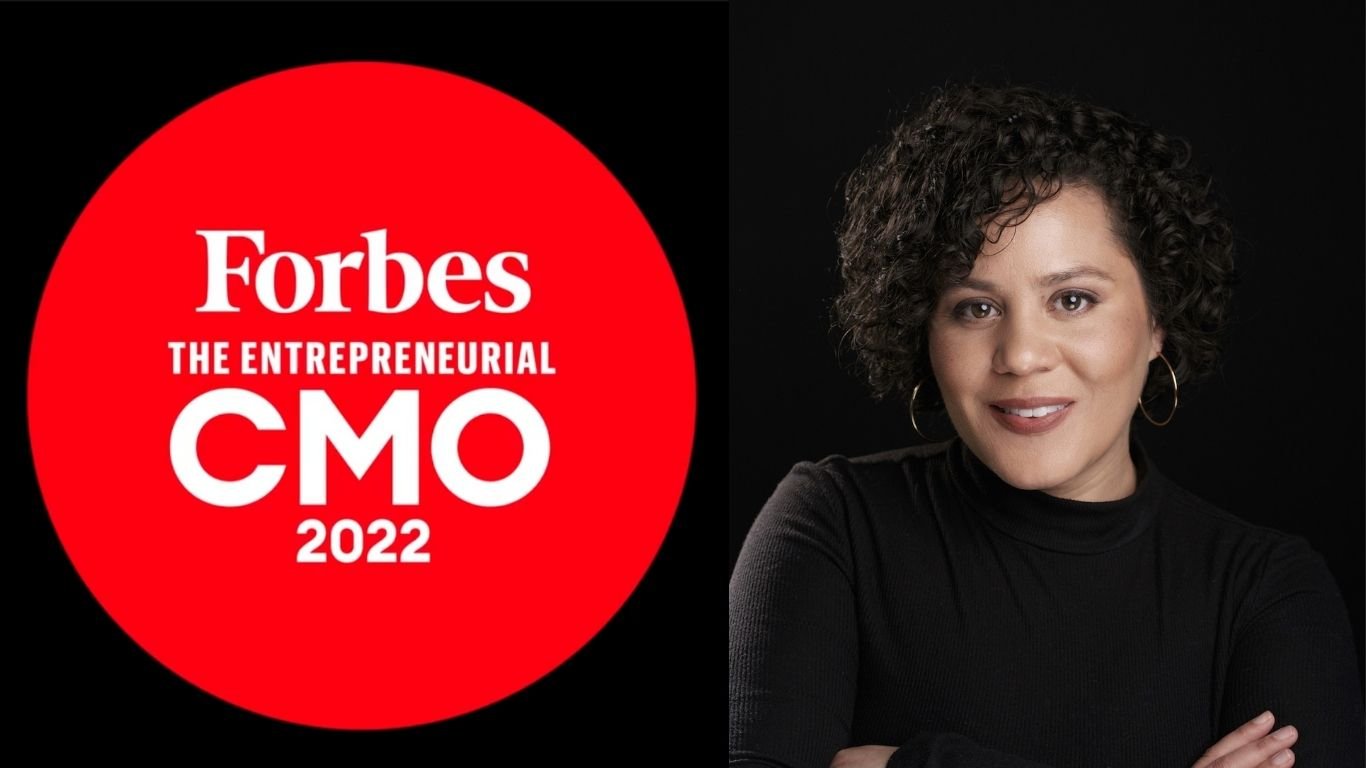
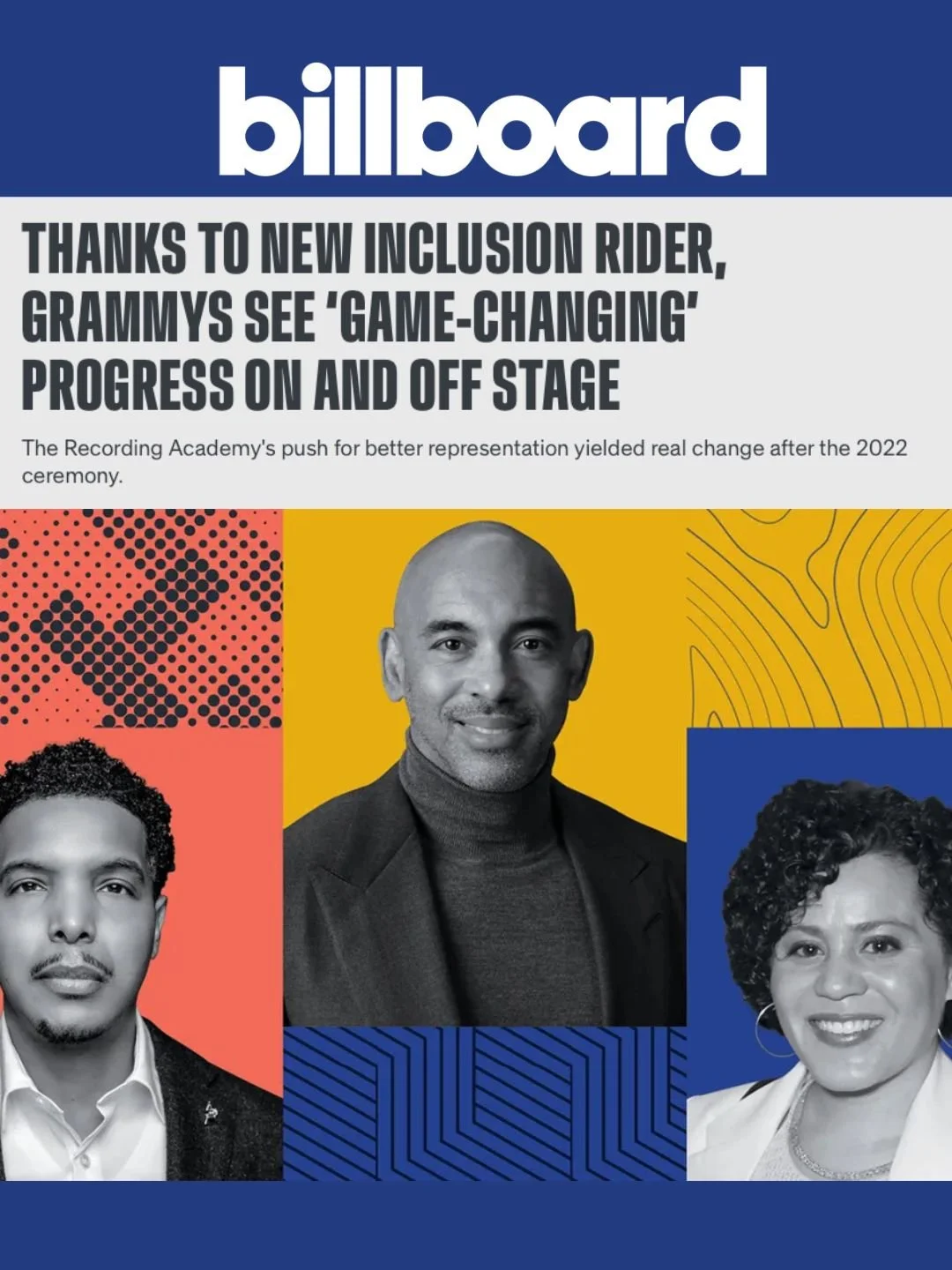
Her work at the intersection of corporate accountability, culture, and racial equity was further recognized in Forbes’ 2022 list of the 50 Most Powerful Entrepreneurial CMOs, solidifying her influence within both business and social impact circles. In parallel, Kelle joined The Recording Academy’s Advisory Council, where her advocacy contributed to measurable progress toward improved representation—resulting in tangible change following the 2022 Grammy Awards ceremony.
Together, these outcomes underscore how strategic narrative positioning can translate media credibility into institutional leadership, long-term influence, and real-world impact beyond the initial campaign.
Key Takeaway:
Strategic narrative control—when paired with credibility and timing—can transform a timely idea into an institutionally trusted platform, creating impact that extends beyond media into leadership, policy, and lasting change.